30 April 2012

Creating Fictional Characters with Spoken Accents


Accents Can Help Your Fictional Characters

Just like in real life, accents can tell a lot about a fictional character. An accent serves as a reminder that an individual is unique. It sets the speaker apart from those without accents. When a fictional character speaks with an accent, it may help to give the landscape a wider breadth because the reader imagines an individual who comes from far away. Accents reflect realism. The world we live in has many accents, both domestic and foreign. Using them with your fiction can help to imbue your characters with greater depth.

How to Give a Fictional Character an Accent

In short, you have two options for giving your character an accent. The first is to change the way your spell the words. The second is to tell your reader that the character has an accent. Both methods have pros and cons.

Portraying Character Accents through Spelling

When you change spellings, you guarantee that the reader will know the person is speaking with an accent. Unfortunately, some readers might not know what you intended the misspelled word to mean. Words altered too much can frustrate readers. When misspelling words to portray an accent, make sure they are not too different from the original. If words are far removed from the original, then you had better come right out and tell the reader what the character is saying. Afterward, the reader will be able to more easily digest the word or words the character is speaking differently. Characters who pronounce certain words differently can add a special flavor that is quite enjoyable.

Describe Character Accents

When you don’t change the spellings of words, you need to tell your readers about accents through description. You can simply state the type of accent, such as “Russian accent,” or you can describe exactly how the character pronounces certain words. The downside to this method is that you need to remind your reader occasionally. The text does not show the accent so the burden falls upon the narrator’s voice. Don’t believe you can tell your readers once and have them remember throughout an entire book. You will have to drop hints and reminders repeatedly if you want your readers to imagine the accent you hear in your head.

Character Accents Elicit Reactions

An additional way to demonstrate your characters’ spoken accents is to have other characters react to them. Is the foreign speaker hard to understand? Is the sound pleasant or annoying? Your other characters might make comments about an accent or, at the very least, they should have a thought or two about it.

Accents Enhance Fictional Characters

If you are looking for a simple trick to set a character apart, give him or her an accent. Whether it be regional or foreign, the accent will give the character a unique feel.

26 April 2012

How Foreign Language Enhances Fictional Characters


Characters Need Characteristics

Giving a fictional character a foreign language can help a great deal. If you give a character an Italian accent, for example, a reader’s entire concept of Italy will probably get added to that character. Making a character hail from a foreign land increases that character’s depth immediately. Preconceived ideas come prepackaged with almost any language you choose. You can relate a lot of information almost instantaneously.

Multiple Languages Can Imply Value for Fictional Characters

Even if you tell your reader outright that your character is dumb, they may believe otherwise if the character speaks multiple languages. The more languages spoken, the higher marks they might receive. Even if intelligence isn’t included, multiple languages add value to a character. A simple-minded character can still translate for others. A character that can read in more than one language may be very valuable to other characters, and to your plot. A single multi-lingual character might help to write you out of several corners, especially if your characters are moving from country to country.

Foreign Languages Add Depth to Stories

When used with finesse, fictional foreign languages can add depth not only to characters but also to entire fictional settings.
Languages imply:
  • Distance
  • Culture
  • Regions
  • Borders
  • Governments
  • Varied upbringing
That is just a handful, and the list can go on. Language can even suggest the passage of time. Writers often use ancient languages to increase intrigue.

Try Using Languages to Spice Up Your Fiction

If your characters have turned out dull, or you are looking for a special twist, try adding the aspect of a foreign language to one of your characters. You might enhance your writing with an unexpected and interesting dynamic.

13 April 2012

Foreign Words Add Realism to Fiction


Foreign Language Enhances Realism of Fictional Characters

farm_fenceYou can make a few words go a very long way in your fiction. You can go throughout a book, claiming that your character is French, but as soon as he or she says, “Bonjour,” you have sold realism to the reader. In fact, you might not even have to tell your reader from where your character originates. If you were to write a story about the American Southwest, a character that said “Si, Senor,” will immediately be assumed to be of Latin American heritage by your reader. Further, if you use Hispanic characters in your novel, it might be strange to never to hear a word of Spanish.

Foreign Language Adds Realism

A few foreign words will give your characters the realism you are looking for. A bit of research will help you to craft their words. Is your French speaking character from France, or is he or she from Canada or Switzerland? Learning the different nuances between dialects can add detail to your story that is undeniable. Writing that contains those kinds of details is often applauded for allowing the reader to learn something new.

Have Fun with Foreign Language

Don’t get tangled up in foreign language studies. If you have difficulty, just get what you need to enhance your story. You might have fun learning new things. If you enjoy what you find, you will probably translate your sense of interest over to your reader.

10 January 2012

Google Panda Update Takes Advertising Copy 20 Years into the Past and It’s a Good Thing


Google Panda Update Changes Things for Advertising Writers
Google Panda is an update by Google that took affect in 2011. It has created a lot of stir with Internet marketers. Many sites that had top rankings dropped off the charts, according to their owners. SEO writing is a constantly evolving field. You may have had the experience of going to a web site and reading content that seemed awkward. The name of the web site appeared in sentences repeatedly, sometimes not really making sense. Those paragraphs were not really written for you, they were written for a search engine program. Site owners have been caught in a tug of war between search engines and site visitors. Site visitors wanted interesting content but search engines were looking for a particular format. The new Google Panda update has now put the emphasis on the visitor.

Google Panda Looks for Content Geared Toward Visitors
Apparently, Google Panda is designed to look for content that interests visitors. Google did a study to determine what visitors wanted to see or what they liked to see. Based on the results, Google Panda now looks for those characteristics. Photos, site arrangement, and quality of text now take on a new emphasis. Those who became accustomed to robotic SEO writing will have to tone it down. According to reports on the new system, web writers will now have to create their writing with the human reader in mind.

Google Panda Takes Us Into the Past
Google Panda takes us into the past by making writers of advertising copy focus on the reader, rather than “Google bots.” Instead of writing for a search program, writing will again focus on the consumer, the way it did in the past. For those who have suffered through pages of text written for a computer program, that’s good news.

05 January 2012

Good Clean Sentences


Write Strong Sentences
A writer should always try to get the point with as little fluff as possible. While you can do so by creating a great initial sentence or paragraph, you should enhance the body of your work also.

Remove Unnecessary Words From Sentences
Getting to the point means making crisp sentences that don’t have unnecessary words.

“The officer came to a decision about what to do,” could be said more definitely. “The officer decided what to do.”

Keep Readers Interested
The second sentence above is stronger and will push readers along, keeping them reading. Too many words that do not contribute to your meaning might eventually bore them.

Say what you want directly. Instead of “She began to sing,” write; “She sang.”

Get Accustomed to Better Sentences
These added words may seem to belong there. Once you get used to eliminating them, your writing will take on a more powerful feel. You want your reader to remain interested. Loads of extra words like these can turn a reader off, even if he or she doesn’t know why.

Tighten up your reading with concise, tight sentences.

29 December 2011

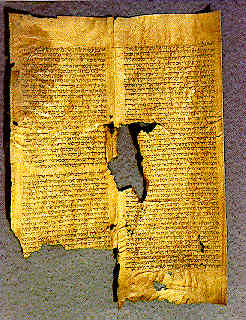
Ancient Paper


A discussion came up during a session of my writing group, a while back, debating types of ancient paper. One of us had written about ancient writing surfaces and symbols. We briefly discussed which words described ancient papers and I told them I would look into it further. Here is what a brief study of the subject turned up.

Papyrus
Egyptians made papyrus paper from the papyrus plant, a reed that grew along rivers. According to Fitz Museum, the ancient peoples also used the papyrus plant to make small, boats, sandals, mats and baskets. Because of the dry climate of Egypt, a number of examples of papyrus paper have survived from ancient times. ScienceBuddies.org describes how the paper was made from pulpy insides of the papyrus stalks. Mediterranean paper-makers laid long slices of the pulp on top of one another in opposite directions. Compressing them while drying created a fairly smooth writing surface. The modern word paper derives from the word papyrus.

Parchment
Parchment is ancient “paper” fashioned from animal skins. Evidence of this form of writing surface dates back over 4000 years.  According to one article, the first true, two-sided parchment was called vellum. Pergamena.net relates that King Pergamon, of modern day Turkey, brought parchment production up to a level where it could rival Egyptian papyrus, circa 150 BC. The word parchment is derived from Pergamon’s name.

Codices, Scrolls and Books
A codex, in ancient times, was as stack of papyrus papers, often bound together. Scrolls were simply longer pieces of parchment, rolled up for storage. Later, when leathers became more refined, they were used to protect codices, creating what we now know as a book cover. As binding techniques improved, the forerunner of the modern book was born.

22 August 2011

Writer's Block: Burnout

Writer’s Block Caused by Burnout
One of the worst types of writer’s block to face is writer’s burnout. Burnout can occur when writing is a paid task or a task assigned by a senior, such as a teacher. The writing is mandatory, which can introduce elements that make writing spontaneously difficult. This can be one of the most difficult types of writer’s block to overcome.

Writer’s Block for Professional writers
Professional writers can experience writer’s block very easily. It is the job of the professional writer to churn out content for paper and digital pages. The work is assigned and often does not reflect the personal interests of the writer. This can occur with copywriters, web content writers, professional bloggers, professional social media writers, reporters, technical writers and more. When the work is not your own passion, creativity can jam. Since any type of writing is a work of creation, this is a problem.

Anatomy of Writer’s Block From Burnout
Looking at the causes can provide some solutions:
  • It is not your own
  • It is the is the idea of another
  • The end product is the product of another
  • You are rehashing an old subject
  • It is a spin of other writing  
  • It is done under duress or orders
  • Your creativity is muzzled by strict guidelines
  • It does not allow you to share your own thoughts and opinions

Why Burnout Causes Writer’s Block
Looking at the above causes, a solutions seem to drop into sight. All of the above reasons have one element in common. The thoughts are not necessarily your own. You do add a piece of yourself to the writing, but for the most part, it is not your thought. You are putting the ideas of a second party onto the page for the reader to see. Your own thoughts occur, but they must be held back. That is the block.

The Cure for Professional Writer’s Burnout
If the cause of the burnout is not being able to share your thoughts, the solution is quite simple. Share them. Get the ideas out of your head that you have had to push aside. If it is not legal for you to criticize your competition, criticize them. If you are not allowed to share your own opinions, write them down. If you see errors in the system, describe them. Write down those thoughts that you are not allowed to voice. Describe every last detail and withheld thought. Get those thoughts out of your head and onto paper or a computer screen.

It should go without saying that publishing these backstage works might not be a good idea. If the writing you have withheld will get you fired or sued, don’t share it with those who will fire or sue you. Don’t put it online. Don’t write it on the office computer system.

It will often suffice simply to write it down. It is no longer locked away in your head. Sharing it with a spouse or trusted friend can help. The source of the jammed up thought process is loosened or set free by voicing these prohibited ideas. Writing down the forbidden thoughts can set you free to write with more ease. Who knows, you may be able to use what you have written later on.

Freedom from Writer’s Block from Burnout
Unblocking the stuck ideas can get you moving again. You may be stopped because you have withheld too much. Get those ideas out so that the flow of words can continue uninhibited. You may find your professional writing gets easier.