14 July 2013

Controlling Characters in a Novel


Creative Control of Literary Characters

Creating characters, settings and plot and the main building blocks for novels. With these three elements in place, you will be on your way to writing your novel. However, many writers find a curious thing occurs after they have begun. Their characters take over. What does that mean? It means the writer has a plot in mind but the characters seem to take a life of their own and diverge from the writer’s intended course.

When Characters Take on Lives of Their Own

When your characters take on a life of their own, you have a decision to make. Do you give them free range to do what they like or do you put them under control. The answer is that it depends. It depends on where your characters are going. Have they taken your novel off track? Will the direction the characters are going lead to the intended resolution of the plot? Good novel writing begins with an outline, which describes your plot. Check the new direction your characters have taken against your outline, then decide if they can exist side by side.

Taking Control of Your Novel Writing

Your characters don’t control your novel, you do. If you like the new developments your characters have created “on their own,” find a way to merge them with your plot. If you cannot merge them with your intended story line, then you need to make tough decisions. Do you change your plot or do you delete the part of the story in which your characters diverged?

Deciding on the Plot for Your Novel

It is not advisable to let your characters run the show. Make the needed decisions to get your novel writing back under your control. The good news is, that no writing is wasted. If you decide to cut out sections of writing to get your story back on track, don’t actually delete them. Cut them and paste them onto separate documents. Save the new document for later use. Be sure to give the saved document a good label. You might wind up with a folder full of these set-aside ideas. That’s O.K. You are a writer. Writers write. Novel writers write a lot.

05 June 2012

Let Readers Mispronounce Your Words


Professional Viewpoint Toward Readers

Be willing to let your readers mispronounce your words. A professional viewpoint toward your writing includes a level of detachment. If your work is successful in the public arena, many thousands of people will read it. Once your work is published, you will probably not be able to control what the public does with it. If you have invented new names and new words, you should sever your emotional attachment to those words. Unless you have written them to comply with the easier rules of pronunciation, you stand a chance that your readers will pronounce them differently than you intended.

How to Get Readers to Pronounce Your Invented Words Properly

Three solutions to troublesome pronunciation are:
  1. Create words and names that use standard pronunciation rules
  2. Create a pronunciation guide
  3. Sever your emotional attachment to invented words and names
Be aware that no matter how hard you do number one, some readers will still mispronounce your words. For number two, realize not all readers will use the guide and not all readers like them. If you truly need a pronunciation guide, you might want to revisit number one. For number three, remember that once you hand your work over to the public, it belongs to them.

Make Fictional Words Easy to Pronounce

If you desire complex-looking words, just be aware that your effect will be visual, rather than auditory. Readers might not like hard-to-pronounce words. Try to make readers happy with your invented words by making them easy, and when they mess them up anyway, just let it go.

27 May 2012

What Is Sword and Planet?


Who Created the Sword and Planet Genre?

The creation of the Sword and Planet genre is credited to Edgar Rice Burroughs. This has become a relevant subject of conversation thanks to the movie John Carter or John Carter of Mars. In the book series, the character, John Carter, is whisked away to Mars and finds adventure and romance with a Martian princess. The first book in the series is called A Princess of Mars and the last or one of the last is called John Carter of Mars. Edgar Rice Burroughs wrote other stories about men engaging in high adventure on other planets, such as Venus, and another that told of adventures inside the moon. The characters used basic weaponry, often swords, thus giving the genre its name.

Noteworthy Sword and Planet

Edgar Rice Burroughs has received credit for inventing Sword and Planet, but other writers have found success with the genre as well. Leigh Bracket created a very entertaining series about the planet Skaith with a main character named Eric John Stark who had an unusual and very rugged upbringing on a hostile planet. The three-book series included The Ginger Star, The Hounds of Skaith and The Reavers of Skaith. Bracket successfully mixed telepathy, witchcraft, swords and sun worship with space ships and space travel.

A Future for Sword and Planet Movies?

Whether or not the movie John Carter brings back the popularity of the genre for readers and fiction writers is yet to be seen. However, it does complete a journey that fans of the sword and planet genre have anticipated for many long years. With movie technology at a point where sword and planet fiction can be successfully translated into film, we may see more of the age-old classics of the pulp fiction era reintroduced to younger generations.

17 May 2012

What Is Pulp Fiction?


Two Definitions for Pulp Fiction

If you ask the average person on the street what pulp fiction is, you will collect three answers rather than two. Unfortunately, the most common response is, “I don’t know.” This answer will come, most often, from those born after the era of pulp fiction. From those of the older generations, or those of the younger generation who have looked up the word, you will receive the other two answers. The first definition describes pulp fiction as novels or short stories printed on cheap paper that contain sexually explicit content. This version describes pulp fiction as cheaply written stories that used sex as part of their allure. The second definition alludes to the same inexpensive paper but relates the content as “escapism.” In this second description, the stories contain wild adventures in exotic settings that allowed the readers to escape their ordinary lives.

What Is the Definition of Pulp Fiction?

Pulp fiction stories were written on cheap, pulpy paper with ragged edges, but which usually had an exiting full-color cover. Some of the stories did contain sexually explicit content and, often, the covers showed scantily clad women in distress. Though such content was part of pulp fiction, it does not truly define it. Pulp fiction included a vast array of genres, such as western, romance, science fiction and crime. Therefore it is more appropriate to describe pulp fiction as exciting and exotic fiction written on inexpensive paper.

Where Did Pulp Fiction Go?

Pulp fiction was a very popular medium for the average person in the decades leading up to World War II. Though various articles cite different reasons for the decline of pulp fiction books, most agree that war related paper shortages created a rise in paper costs. Despite the decline of the medium, pulp fiction left a lasting mark on culture in the United States and worldwide. Some suggest that pulp fiction created the idea of the rough and tumble American hero. Pulp fiction characters include Conan the Barbarian, The Shadow, Buck Rogers and Tarzan. Though the era has passed, present day writers still build from the foundation that the heyday of pulp fiction created. 

Links to sites that describe the history of pulp fiction:
http://www.goldenagestories.com/news/2012/02/10/what-is-pulp-fiction/1008

15 May 2012

Express Fictional Character Education through Speech


Your Fictional Character Has an Education

Your fictional character has an education you might not have taken into consideration. This is true whether your character is a farm girl from the 1700s or a swordsman in a fictional realm. Life includes education. That farm girl learned to cook from her mother and her parents’ education shaped her knowledge. The swordsman in a fictional land had to learn his craft somewhere. Can he read? Is he a simple peasant who became a soldier or is he a nobleman? You should make a decision about your characters’ education. Once you have this idea down, you can then craft they way your character speaks with much more finesse.

Education Shapes Fictional Character Vocabularies

When creating characters, it is important that you make them sound different from one another. If they all have the same voice, readers might get bored. Readers could also wind up confusing the characters. Each character should have a unique voice. One way to achieve that goal is to limit their vocabulary. You can craft their voice by carefully monitoring their choice of words. If you want to show that one character is smarter than another, don’t let the character of lesser intelligence use bigger words. You might allow only the smartest of your fictional characters to make use of your full vocabulary. Your reader will probably not recognize this technique on the surface, but the flavor of the characters’ intelligence will translate through their choice of words.

Fictional Character Vocabularies Tell A Lot

Let a snide character use words that tell of an imagined intellectual superiority. Have simple characters use words that speak of humility. Your choice of your character words will give them a depth they will lack if you let them speak without vocabulary limits. Try crafting their speech with their education and attitudes in mind and you might find they take on more realism than even you anticipated.

08 May 2012

Create Invented Words with the Reader in Mind


Invented Words in Fiction

If you are writing a fictional story or novel, you will probably need to invent some words. The further away from reality you get, the more new words you will need.

Fictional Characters and Places

You will need fictional names of characters and of places. You might invent a new location, a species or a new technology. Regardless of what you are creating from scratch, be sure to label those new things with your reader in mind.

Create Fictional Words Wisely

My Pet; Aul'thlakt-Tau'nu'nu
Three apostrophes in a name might seem foreign or alien, but it doesn’t help your reader get past the word quickly. If people stumble on the word each time they come to it, they might get annoyed. Readers should be able to read your invented words with relative ease.

Test Invented Words

Because many people sound out their words, invented terms should be possible to pronounce. Some writers will create new words without testing the sound out loud. If you find you stumble on your own creation while reading aloud, your reader won’t stand a chance. Be kind to your audience. Make your names as weird, unique or alien as you like, but make them pronounceable, for the sake of your readers.

05 May 2012

Fictional Foreign Languages


Foreign Languages Add Realism to Fictional Characters

Giving one of your characters a foreign language can help immensely when crafting unique characters, even if the language isn't real. Language gives you a level of control that few other traits supply. Further, because we run into this phenomenon in real life, it makes fictional characters and settings seem more real.

Invented Foreign Languages

Be careful when crafting a language that doesn’t actually exist. The first problem is you might wind up using words from a real language. Do an Internet search with your made up words to be sure you are not saying something you did not intend. Secondly, don’t overuse them. Too much text written in a non-existent language may detract rather than add to your story. If you are actually going to write fictional foreign sentences, keep them short. You might also want to limit your use of hyphens and apostrophes. It might make the language seem foreign but if you look at actual foreign languages, they don’t look like that. Hyphens and apostrophes might make the reader pronounce it the way you’d like but it won’t look as real to the eye. What’s more, many readers won’t take the time to pronounce it once they realize it is a fictional language.

Fictional Foreign Language Techniques

A sentence spoken in a foreign language will identify the speaker as foreign. A handful of such sentences are all that you will need. You might create the effect you want with just one sentence. Another technique is to give the character a single word or phrase, which they repeat throughout the story. The reader only has to learn the phrase once and thereafter identifies the character as a foreign language speaker no matter how much ordinary dialogue the character uses. Foreign language can also add mystique and mystery. An ancient text written in a dead language can be a lot of fun.

The uses for foreign language in fiction are as wide as your imagination. Use them well and your characters will take on greater depth.

30 April 2012

Creating Fictional Characters with Spoken Accents


Accents Can Help Your Fictional Characters

Just like in real life, accents can tell a lot about a fictional character. An accent serves as a reminder that an individual is unique. It sets the speaker apart from those without accents. When a fictional character speaks with an accent, it may help to give the landscape a wider breadth because the reader imagines an individual who comes from far away. Accents reflect realism. The world we live in has many accents, both domestic and foreign. Using them with your fiction can help to imbue your characters with greater depth.

How to Give a Fictional Character an Accent

In short, you have two options for giving your character an accent. The first is to change the way your spell the words. The second is to tell your reader that the character has an accent. Both methods have pros and cons.

Portraying Character Accents through Spelling

When you change spellings, you guarantee that the reader will know the person is speaking with an accent. Unfortunately, some readers might not know what you intended the misspelled word to mean. Words altered too much can frustrate readers. When misspelling words to portray an accent, make sure they are not too different from the original. If words are far removed from the original, then you had better come right out and tell the reader what the character is saying. Afterward, the reader will be able to more easily digest the word or words the character is speaking differently. Characters who pronounce certain words differently can add a special flavor that is quite enjoyable.

Describe Character Accents

When you don’t change the spellings of words, you need to tell your readers about accents through description. You can simply state the type of accent, such as “Russian accent,” or you can describe exactly how the character pronounces certain words. The downside to this method is that you need to remind your reader occasionally. The text does not show the accent so the burden falls upon the narrator’s voice. Don’t believe you can tell your readers once and have them remember throughout an entire book. You will have to drop hints and reminders repeatedly if you want your readers to imagine the accent you hear in your head.

Character Accents Elicit Reactions

An additional way to demonstrate your characters’ spoken accents is to have other characters react to them. Is the foreign speaker hard to understand? Is the sound pleasant or annoying? Your other characters might make comments about an accent or, at the very least, they should have a thought or two about it.

Accents Enhance Fictional Characters

If you are looking for a simple trick to set a character apart, give him or her an accent. Whether it be regional or foreign, the accent will give the character a unique feel.

26 April 2012

How Foreign Language Enhances Fictional Characters


Characters Need Characteristics

Giving a fictional character a foreign language can help a great deal. If you give a character an Italian accent, for example, a reader’s entire concept of Italy will probably get added to that character. Making a character hail from a foreign land increases that character’s depth immediately. Preconceived ideas come prepackaged with almost any language you choose. You can relate a lot of information almost instantaneously.

Multiple Languages Can Imply Value for Fictional Characters

Even if you tell your reader outright that your character is dumb, they may believe otherwise if the character speaks multiple languages. The more languages spoken, the higher marks they might receive. Even if intelligence isn’t included, multiple languages add value to a character. A simple-minded character can still translate for others. A character that can read in more than one language may be very valuable to other characters, and to your plot. A single multi-lingual character might help to write you out of several corners, especially if your characters are moving from country to country.

Foreign Languages Add Depth to Stories

When used with finesse, fictional foreign languages can add depth not only to characters but also to entire fictional settings.
Languages imply:
  • Distance
  • Culture
  • Regions
  • Borders
  • Governments
  • Varied upbringing
That is just a handful, and the list can go on. Language can even suggest the passage of time. Writers often use ancient languages to increase intrigue.

Try Using Languages to Spice Up Your Fiction

If your characters have turned out dull, or you are looking for a special twist, try adding the aspect of a foreign language to one of your characters. You might enhance your writing with an unexpected and interesting dynamic.

13 April 2012

Foreign Words Add Realism to Fiction


Foreign Language Enhances Realism of Fictional Characters

farm_fenceYou can make a few words go a very long way in your fiction. You can go throughout a book, claiming that your character is French, but as soon as he or she says, “Bonjour,” you have sold realism to the reader. In fact, you might not even have to tell your reader from where your character originates. If you were to write a story about the American Southwest, a character that said “Si, Senor,” will immediately be assumed to be of Latin American heritage by your reader. Further, if you use Hispanic characters in your novel, it might be strange to never to hear a word of Spanish.

Foreign Language Adds Realism

A few foreign words will give your characters the realism you are looking for. A bit of research will help you to craft their words. Is your French speaking character from France, or is he or she from Canada or Switzerland? Learning the different nuances between dialects can add detail to your story that is undeniable. Writing that contains those kinds of details is often applauded for allowing the reader to learn something new.

Have Fun with Foreign Language

Don’t get tangled up in foreign language studies. If you have difficulty, just get what you need to enhance your story. You might have fun learning new things. If you enjoy what you find, you will probably translate your sense of interest over to your reader.

10 January 2012

Google Panda Update Takes Advertising Copy 20 Years into the Past and It’s a Good Thing


Google Panda Update Changes Things for Advertising Writers
Google Panda is an update by Google that took affect in 2011. It has created a lot of stir with Internet marketers. Many sites that had top rankings dropped off the charts, according to their owners. SEO writing is a constantly evolving field. You may have had the experience of going to a web site and reading content that seemed awkward. The name of the web site appeared in sentences repeatedly, sometimes not really making sense. Those paragraphs were not really written for you, they were written for a search engine program. Site owners have been caught in a tug of war between search engines and site visitors. Site visitors wanted interesting content but search engines were looking for a particular format. The new Google Panda update has now put the emphasis on the visitor.

Google Panda Looks for Content Geared Toward Visitors
Apparently, Google Panda is designed to look for content that interests visitors. Google did a study to determine what visitors wanted to see or what they liked to see. Based on the results, Google Panda now looks for those characteristics. Photos, site arrangement, and quality of text now take on a new emphasis. Those who became accustomed to robotic SEO writing will have to tone it down. According to reports on the new system, web writers will now have to create their writing with the human reader in mind.

Google Panda Takes Us Into the Past
Google Panda takes us into the past by making writers of advertising copy focus on the reader, rather than “Google bots.” Instead of writing for a search program, writing will again focus on the consumer, the way it did in the past. For those who have suffered through pages of text written for a computer program, that’s good news.

05 January 2012

Good Clean Sentences


Write Strong Sentences
A writer should always try to get the point with as little fluff as possible. While you can do so by creating a great initial sentence or paragraph, you should enhance the body of your work also.

Remove Unnecessary Words From Sentences
Getting to the point means making crisp sentences that don’t have unnecessary words.

“The officer came to a decision about what to do,” could be said more definitely. “The officer decided what to do.”

Keep Readers Interested
The second sentence above is stronger and will push readers along, keeping them reading. Too many words that do not contribute to your meaning might eventually bore them.

Say what you want directly. Instead of “She began to sing,” write; “She sang.”

Get Accustomed to Better Sentences
These added words may seem to belong there. Once you get used to eliminating them, your writing will take on a more powerful feel. You want your reader to remain interested. Loads of extra words like these can turn a reader off, even if he or she doesn’t know why.

Tighten up your reading with concise, tight sentences.

29 December 2011

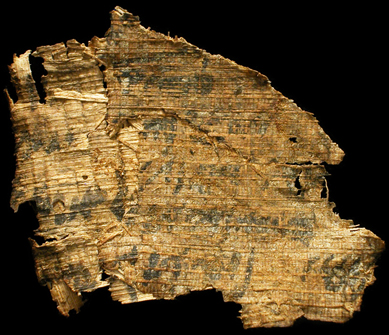
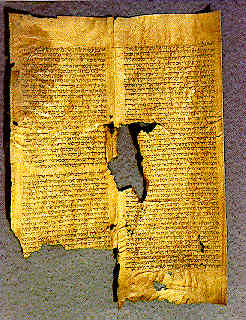
Ancient Paper


A discussion came up during a session of my writing group, a while back, debating types of ancient paper. One of us had written about ancient writing surfaces and symbols. We briefly discussed which words described ancient papers and I told them I would look into it further. Here is what a brief study of the subject turned up.

Papyrus
Egyptians made papyrus paper from the papyrus plant, a reed that grew along rivers. According to Fitz Museum, the ancient peoples also used the papyrus plant to make small, boats, sandals, mats and baskets. Because of the dry climate of Egypt, a number of examples of papyrus paper have survived from ancient times. ScienceBuddies.org describes how the paper was made from pulpy insides of the papyrus stalks. Mediterranean paper-makers laid long slices of the pulp on top of one another in opposite directions. Compressing them while drying created a fairly smooth writing surface. The modern word paper derives from the word papyrus.

Parchment
Parchment is ancient “paper” fashioned from animal skins. Evidence of this form of writing surface dates back over 4000 years.  According to one article, the first true, two-sided parchment was called vellum. Pergamena.net relates that King Pergamon, of modern day Turkey, brought parchment production up to a level where it could rival Egyptian papyrus, circa 150 BC. The word parchment is derived from Pergamon’s name.

Codices, Scrolls and Books
A codex, in ancient times, was as stack of papyrus papers, often bound together. Scrolls were simply longer pieces of parchment, rolled up for storage. Later, when leathers became more refined, they were used to protect codices, creating what we now know as a book cover. As binding techniques improved, the forerunner of the modern book was born.

22 August 2011

Writer's Block: Burnout

Writer’s Block Caused by Burnout
One of the worst types of writer’s block to face is writer’s burnout. Burnout can occur when writing is a paid task or a task assigned by a senior, such as a teacher. The writing is mandatory, which can introduce elements that make writing spontaneously difficult. This can be one of the most difficult types of writer’s block to overcome.

Writer’s Block for Professional writers
Professional writers can experience writer’s block very easily. It is the job of the professional writer to churn out content for paper and digital pages. The work is assigned and often does not reflect the personal interests of the writer. This can occur with copywriters, web content writers, professional bloggers, professional social media writers, reporters, technical writers and more. When the work is not your own passion, creativity can jam. Since any type of writing is a work of creation, this is a problem.

Anatomy of Writer’s Block From Burnout
Looking at the causes can provide some solutions:
  • It is not your own
  • It is the is the idea of another
  • The end product is the product of another
  • You are rehashing an old subject
  • It is a spin of other writing  
  • It is done under duress or orders
  • Your creativity is muzzled by strict guidelines
  • It does not allow you to share your own thoughts and opinions

Why Burnout Causes Writer’s Block
Looking at the above causes, a solutions seem to drop into sight. All of the above reasons have one element in common. The thoughts are not necessarily your own. You do add a piece of yourself to the writing, but for the most part, it is not your thought. You are putting the ideas of a second party onto the page for the reader to see. Your own thoughts occur, but they must be held back. That is the block.

The Cure for Professional Writer’s Burnout
If the cause of the burnout is not being able to share your thoughts, the solution is quite simple. Share them. Get the ideas out of your head that you have had to push aside. If it is not legal for you to criticize your competition, criticize them. If you are not allowed to share your own opinions, write them down. If you see errors in the system, describe them. Write down those thoughts that you are not allowed to voice. Describe every last detail and withheld thought. Get those thoughts out of your head and onto paper or a computer screen.

It should go without saying that publishing these backstage works might not be a good idea. If the writing you have withheld will get you fired or sued, don’t share it with those who will fire or sue you. Don’t put it online. Don’t write it on the office computer system.

It will often suffice simply to write it down. It is no longer locked away in your head. Sharing it with a spouse or trusted friend can help. The source of the jammed up thought process is loosened or set free by voicing these prohibited ideas. Writing down the forbidden thoughts can set you free to write with more ease. Who knows, you may be able to use what you have written later on.

Freedom from Writer’s Block from Burnout
Unblocking the stuck ideas can get you moving again. You may be stopped because you have withheld too much. Get those ideas out so that the flow of words can continue uninhibited. You may find your professional writing gets easier.

29 July 2011

Writer’s Block: High School and College Assignments


Writer’s Block and the Pressure of an Assignment
One of the hardest writer’s blocks to overcome is one that develops under pressure. A writing assignment from a high school teacher or a college professor can definitely become an issue when writer’s block becomes involved.

Writer’s Block for Non-Writers
For someone born to write, a writing assignment might be a pleasure. These individuals sit down, pound out the words and only have the burden of editing left to worry about. For others, it is usually not so simple. The technical aspects of writing can get in the way. The desire to write may also be missing. The difficulty of the subject matter of the writing piece may also be involved. With all of these factors combined, student writer’s block can often follow.

Tackling the Subject Is the First Cure to Writer’s Block
Before you can write about a subject, you must understand it. Unless it is an English or journalism class, the entire purpose of the assignment is to prove you understand the subject matter. Writing about a subject cannot be done from a stance of ignorance. The writing assignment forces the student to find out enough to be able to repeat it back for the teacher. A student trying to avoid studying is not going to do well with the writing assignment. Teachers know this, which is why they create writing assignments. To get the writing assignment done, the student needs to roll up his or her sleeves and learn. This may be frustrating to some, but really, that is what school is all about. A student should study as though the future depends on it, because it does.

Handling the Technical Aspects of Writing to Overcome Writer’s Block
Not knowing how to write well can undermine the willingness to write. For high school students the task is a bit easier. School at this level should be designed to teach writing skills. Do not pass up the opportunity to learn while at the high school level, especially if no plans for college exist. Being able to express oneself clearly goes a long, long way in the real world. If the skill is not there, write anyway. Good teachers will help students to improve writing skills.

For college students, the task of becoming a good writer is hopefully based on a good education in high school. If not, do not shy away from extra study to find out how it is done. With the Internet available, it is quite easy to find a site that describes how an essay is written, how a term paper is written and so on. Students should use these resources and model their work after them. This is a learning exercise in itself. Making good use of such resources early on in college enables students to write without them in the following college years.

Coming Up with Content to Overcome Writer’s Block
Coming up with enough to say can be a problem even with an assignment as short as one page. In college, a much longer piece may be expected. For one to five pages of content, start by writing a paragraph about the basic ideas that need to be covered. Then, take each sentence and change it into a title for a new paragraph. Some shifting of words might be necessary to make titles, but that’s not the point. The point is to lay the subject matter out. For a longer writing assignment covering many pages, write out a one page essay covering the entire subject. Pull this one-page essay apart to find all the different subjects touched upon and use them to write paragraphs or even entire pages of material.

Basics of Overcoming Student Writer’s Block
These are basic strategies to overcome student writer’s block. More reasons may exist for having trouble writing and other solutions may need to be applied to those. Hopefully, the above points cover what a student needs to get back to writing so that the assignment can be completed.

28 July 2011

Writer's Block: Bouncing Back from Failure


Failure Can Bring on Writer’s Block
One of the most devastating ways to wind up with writer’s block is for a published work to fail. This can be as simple as an unpopular blog post or as major as a book that did not sell. Whatever the size of the piece, learning that the writing was not popular can ruin the desire to write more.

Writer’s Block from Simple Sources
Even a one-page article can draw in unwanted criticism. An idea that seemed good upon writing may draw in comments that surprise the writer. With today’s social media commentary available on blogs, a writer can hear some intensely negative statements. Some writing can even start online feuds.

Failure of a Pet Manuscript Can Cause Writer’s Block
Most writers have a favorite story they are passionate about. The story is at their core and they long to share it. If this work is shot down, a writer can feel as though his or her entire career has failed. Pet projects, favorite subjects, core beliefs or any deep-seated subject the author chooses to share may cause a negative effect if it is not well accepted. Coming back from such a blow is difficult, but it is not impossible.

Coming Back from a Failure as a Writer
The real secret to coming back from such a failure is to properly define what a writer is. A writer is someone who writes. Is a writer someone who writes just one book? Perhaps, but, truly, if one book is possible, then so are others. Writing is not something that can be capped or have limits set to it. It is endless. It can be produced continuously. To believe that one book is all a writer is worth is not true. Writers write. Coming back from failure as a writer is simply a matter of volume. If the one mere piece of writing fails, write more. With diligence, the failed book or project will be dwarfed by other writings produced.

Become a Better Writer While Overcoming Writer’s Block
Often times, the failed work is an early work. Beginning writers are rarely great writers. Writing is a skill that takes practice. Each new work is usually better than the last. The lessons learned carry forward, making each new effort an improved product. This is why continuing to write is essential. If you have failed as a writer, the solution is to keep writing, not to quit. Continuing on will hone the skills needed to be a better writer. Stopping will leave you at the skill level at which you quit. If you truly dream of being a writer, continuing onward is the only option.

How to Become a Better Writer
Not all advice is bad advice. Make no mistake; writers get a lot of bad advice about their craft. It falls in the lap of every writer to differentiate between good advice and destructive advice. If your work has failed, your technical skill as a writer may need improvement. Don’t be too prideful to accept instruction. Joining a writing group that gives constructive, positive advice is a good idea. A good writing group will improve the skills of a writer and will make the writer want to write more. If the group does not inspire both, move on to one that does.

The Solution to Writer’s Block Brought on by Failure
The solution is an easy one. Don’t stop. Do not quit because of a failure. Even if the failure is central to your dream of being a writer, realize that writer’s write for their entire lives. A book is just one step along the way. Writing continuously and in volume will have the effect of overcoming any failure of a past work. Bury that failure with a mountain of other works. You can only improve by doing so. While you are burying it, you’ll be writing.

23 July 2011

Writer's Block: Bouncing Back from Rejection

Rejection Can Induce Writer’s Block
Few things can douse the fires of creativity more than rejection. Creating a written work that does not please the intended audience can be crushing. Knowing how to bounce back from such a blow is important. It can be done and it should be done.

A Rejection Letter Is No Excuse to Quit
Receiving rejection letters is hardest for beginners. The writer pours his or her soul into the manuscript and the editor sends a response back saying it is not what the publication needs. Published authors seem to pay little attention to one rejection letter. Those who succeed at getting published apparently don’t pay any attention to a stack of rejections. If the first ten editors don’t want it, one of the next ten might.

Writer’s Block Can Follow Criticism from Colleagues
Rejection from colleagues can also hurt self-esteem. Writers who have created a piece that their fellows don’t admire can feel as though they have failed. Further, this group will likely add comments and suggestions to the their lukewarm reactions.

Lukewarm Response from Loved Ones
Less than enthusiastic responses from loved ones or friends can hurt the most. Some expect this group to enjoy the work as much as they do. This rarely ever happens. Familiarity tends to mute the responses to written works. A certain distance, or personal unfamiliarity with the author apparently lends to desirability of the work.

Writer’s Block Can Follow Perceived Rejection
Writers block can ensue after any of these so-called rejections. The truth is that these are not failures. Editors are overrun by manuscripts and often do not have the time to look at all of them. A single glance might be all you get. Colleagues, friends and family may be too familiar with the writer. The closeness or familiarity lets these readers too far into the zone of the writer. The public, apparently, enjoys reading the works of those distant from them, rather than those close. Fighting this will likely be impossible and may lead to further disappointment.

The Solution to Writer’s Block
The solution to this form of writer’s block is not hard to describe. Don’t let it bother you.

Editors Want to Help Writers
To deal with the rejection from editors realize that you are not dealing with an issue of acceptance or non-acceptance. It is purely a matter of business. The solution is to find out what writing techniques catch the eye of an editor in those first few seconds. Lists of do’s and don’t’s are strewn far and wide across the Internet. Use them. Writing techniques can and do make a difference. Read advice from editors. They seem more than happy to tell writers what they want and don’t want. Read these articles and do what they ask.

Avoid Rejection from Loved Ones
To deal with the rejection from colleagues, friends and family, the solution is very simple. Don’t show them your work. Or, if you must show it to them, do so with absolutely no expectations for their response. Believing that they must like it for it to be good is just plain wrong. People close to the writer may very well give a poor response to the written product even if it is quite good. Put no stock whatsoever into what people close to you think of your work.

Join a Group of Like-Minded Writers
A great way to overcome the issue of rejection is to join a writer’s group with a positive attitude. Shop around. Groups exist that will tear writers to pieces so watch out for those. When looking for a group, the writer should consider that he or she is shopping. If a group heartlessly tears the work apart, that group really isn’t good for writers, or at least for beginning writers. If a group makes the writer want to quit, it is not a good group. Good groups will make writers want to write more.

Be Ready for Rejection
Putting on a good set of emotional armor isn’t a bad idea either. Be ready for some criticism. Some of it will be of no value, some of it will, but if a writer puts his or her work out there, evaluation will surely follow. Be ready for it.

Becoming a Better Writer
A writer who uses criticism to his or her advantage will become a better writer. The critique that tells the writer to hang it up should be tossed in the garbage. Advice that builds good writing skills and corrects obvious errors is usable advice. Dividing these two types of criticism into the appropriate category may be what is needed.

End Writer’s Block by Choice
Lastly, if a person wants to be a writer, advice to the contrary should be ignored. No writer starts out will all the skills needed to achieve his or her goals. Comments from others should be used as tools. These tools should be distanced from emotional response. For those who has stopped writing because of negative criticism, the best advice is to simply brush off the dust and get back on the horse. Writers who haven’t reached their goals aren’t finished yet.